Concrete Parking Lot Building in Lansing MI - a lot that needs less patching
Tired of patching potholes and sealing cracks every year? A concrete lot costs more to build and usually asks less of you after that.
Should you pave your Lansing parking lot in concrete?
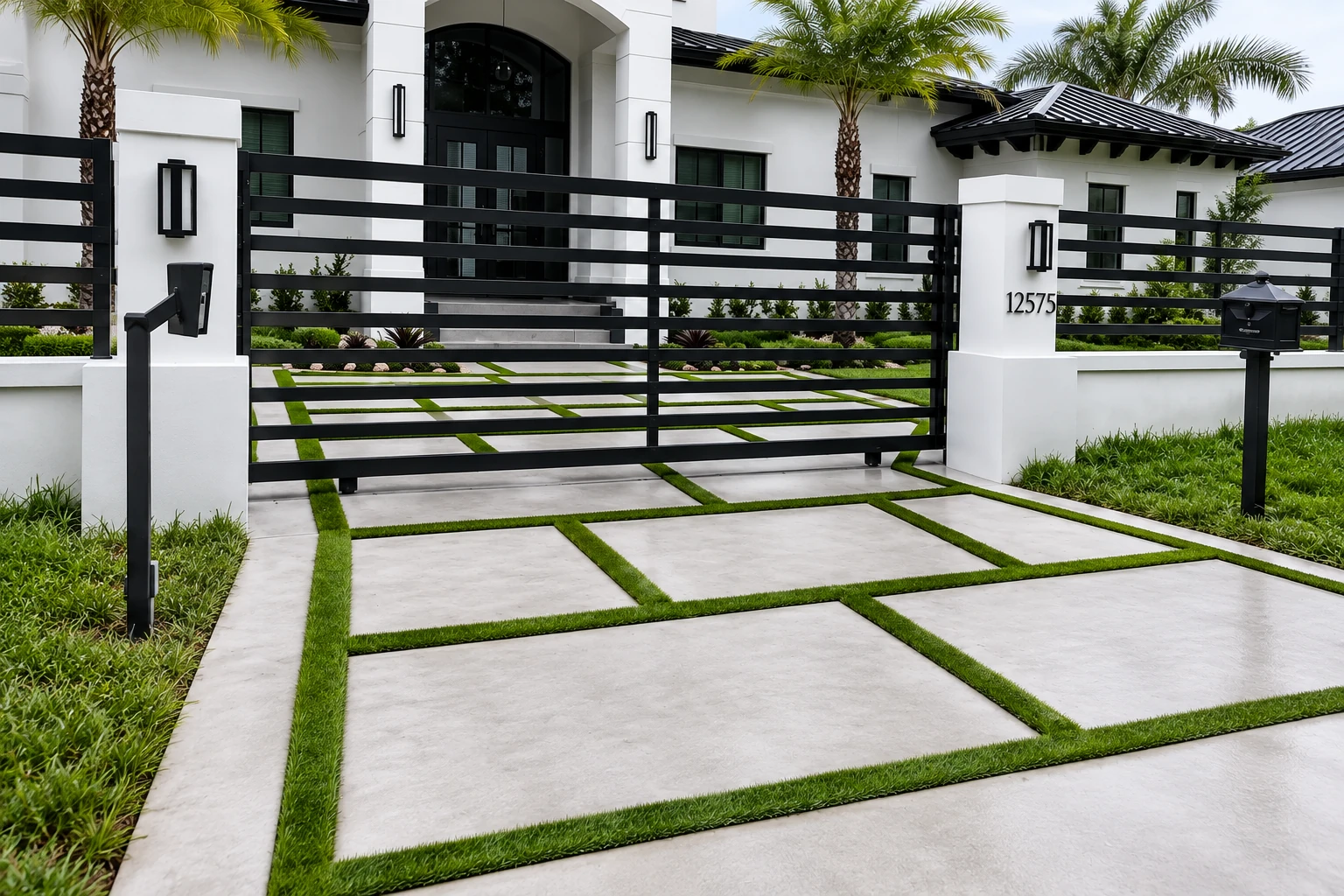
Concrete parking lot building in Lansing means laying out the lot, digging out and packing the base, planning where the rain and snowmelt go, and pouring a slab with the thickness and reinforcement your project calls for. What you get is a lot that drains and stays put instead of one you patch every spring.
Most owners who call us either have an asphalt lot that keeps cracking and getting potholes, or they're building new and weighing concrete against an asphalt bid that looks cheaper. The price of a concrete lot moves with its size, how much digging and base work the ground needs, how the water has to be collected, how easily trucks can get in, and whether part of the lot has to stay open while we work in sections. The schedule turns on the city's review where it applies, the season and the wait before cars can drive on the new slab. The written estimate I send after walking the lot puts your own numbers to all of it. If the lot meets a walk at the building entrance, we can plan new sidewalk along with it.
How we handle concrete parking lot building
Before anything is dug, I lay out what concrete will cost you up front next to what an asphalt lot takes to keep up, because that comparison is the real decision and it's yours to make. Once you choose concrete, we stake out the lot, dig out the topsoil and soft ground, and pack the subgrade, the dirt the whole slab rests on, with a stone base on top, because a base that's only raked level settles and takes the slab down with it. We set the grades so water runs to where it can be collected, away from the building and not toward it. Then we place rebar, the steel inside that holds the slab together if it cracks. We like to pour early in the day, since a pour finished in midday heat can leave a weak, dusty top. We give the surface a broom finish, a light ridged texture that gives tires and shoes grip on a wet or icy morning. We cut control joints as soon as the slab is hard enough. These are shallow straight cuts that give the concrete a place to crack where we chose, and not wherever it likes. After that we keep the slab covered and damp while it cures, which is the slow hardening it does before it can take traffic. If the budget gets tight, I'd rather spend it on the base than on a fancier finish. Nobody sees the base on pour day, but it's what decides whether the lot is still flat years from now.
Parking lots usually come with other concrete work around them. Light poles, a sign or a dumpster enclosure each need concrete footings under them, and we set those before the slab so we're not cutting into new concrete later. If the building beside the lot has settled and the old surface now tips toward it, foundation raising brings the building back up first. That way we can set the lot's grades against a building that isn't still moving.
Site plans, permits and drainage for a Lansing parking lot
In Lansing, a new lot usually starts with the city before it starts with us. Any work in the right-of-way, the public strip along the street that takes in the sidewalk and the drive, needs a Right-of-Way permit from the City of Lansing, and the contractor gets it before building. Putting down 1,000 square feet or more of new hard surface, or regrading in a way that changes where water drains, calls for a site plan to the city's Planning Office. One- and two-family homes are the exception. For new lots and major rebuilds, the city generally won't let water drain to the road across the drive or the sidewalk, so you may need a collection system built into the lot. I bring these steps up at the first visit so they don't hold up the job. When the lot needs a permit, we take care of the application and the inspections and keep you posted on where things stand. The Planning Office is where you confirm the current rules for your lot.
Our winters freeze and thaw over and over, so water that sits on a lot or soaks under it works at the slab all season. On older lots we're asked to replace, the trouble usually starts where water pooled and the base went soft. We dig those spots out to firm ground before anything is built back. We're based in Lansing and work across the cities around it, and we plan the base and drainage the same way on lots in East Lansing and Okemos.
How your parking lot gets built
Call or send the form
Call (517) 246-3566 or send the form with a few lines about the lot, and we'll get back to you to set a time for me to come out. We're open every day from 8 AM to 9 PM, so an evening call works fine.
I walk the lot with you
I look at the ground, the slope and where the water goes now, ask how the lot will be used, from daily cars to delivery trucks and plows, and answer whatever you want to ask. Then I send a written estimate that spells out the work, so you can hold it up next to an asphalt bid line by line.
We check permits and set a date
Once you're ready, we find out which city or township office covers your address and set a pour date that suits the job and the season. Where the city's site plan review applies, the pour date follows its approval.
We build it and clean up
I work the job with our crew from the dig-out through the pour and the cleanup. Before you open the lot, I'll tell you how long to keep cars off it while it cures and how to handle its first winter.
Get a written estimate for your parking lot, base and drainage
Estimates are free and done on site, and there's no pressure to book. We reply within one business day to set a time. Then I come out to walk the lot with you, and after the visit I send you a written estimate.
Questions before you build a concrete parking lot
Is a concrete parking lot worth the higher cost compared to asphalt?
It can be, if you judge it on what the lot costs to own over the years and not just what it costs to install. The Michigan Concrete Association says concrete typically costs more to put in. It also says asphalt usually needs regular sealcoating, resurfacing every so often and ongoing crack and pothole repairs, and those cycles can add up, especially with freeze-thaw winters like ours. So set our written estimate beside your asphalt bid along with the upkeep that bid leaves out.
What is the best time of year to pour a concrete parking lot in Lansing?
September or earlier, if you can plan for it. A 2019 engineering talk on surface flaking advises placing flatwork, meaning flat slabs like lots, drives and walks, no later than September. It says a later pour can still be done when the risks are understood. Calling early in the year gives the city's review and the pour room to land in that window.
How do I protect a new concrete parking lot in its first winter?
The safest plan is no deicer at all the first winter, or, more realistically, none until the concrete is 2 to 3 months old. The same engineering talk advises protecting new concrete with a silane or siloxane sealer, a clear treatment that soaks in and helps keep water and salt out. If your lot will be poured late in the season, settle the plowing and salt plan with whoever clears it before the first snow.
What city approvals does a new parking lot need in Lansing?
Most new lots in Lansing go through the site plan review and need the right-of-way permit covered above, and some also need erosion control and storm water approvals. A lot that disturbs more than 1 acre, or sits within 500 feet of a lake, river, stream or other watercourse, needs an approved city soil erosion and sedimentation control plan before the site plan gets final approval. It then needs an erosion control permit before construction starts. The city's checklist also asks for storm water handling when hard surface grows by more than 1,000 square feet, counted together across site plans filed one after another.
How many trees does Lansing require for a new parking lot?
Outside industrial districts, the version of Lansing's site plan checklist dated 1-1-22 lists 1 tree for every 4,000 square feet of paved surface, with at least 2 trees. In industrial districts it's 1 tree for every 6,000 square feet. Check the current numbers with the Planning Office, and we'll leave room for the trees in the layout.
What causes the surface of a concrete lot to flake or peel?
Engineers point to a handful of causes, most often working together. These include too little entrained air in the mix, the tiny bubbles that give freezing water room, a surface that was worked too much, poor curing, traffic too early and deicing salt. Ask any contractor you're weighing how their crew will finish and cure the slab, and I'm glad to walk you through ours at the estimate.
Why Lansing owners call Benchmark Lansing Concrete Company for parking lots
I walk your lot myself
I come out to look at the job in person, and I'm on site with our crew when it's built. The person who wrote your estimate is the one watching the base go in.
Learned concrete on my dad's pours
I started this business in Lansing in 2023, three years ago, after growing up on my dad's jobs tying steel and finishing slabs. He taught me a slab is only as good as the prep under it, and we still build that way.
Fully licensed and insured
We're fully licensed and insured. On a lot with trucks, crews and your property all in play, that's worth asking any contractor about before anyone breaks ground.
Lansing site rules raised early
At the first visit I ask about your zoning district and whether a lake, river or stream is nearby, because those decide your tree count and whether erosion control applies. Knowing that before the estimate keeps a city review from catching you halfway through.
On a parking lot, the parts that matter most are the ones you won't see once it's poured, so ask me anything about the base and the drainage. When you're ready, contact us and I'll come take a look.
Other work that often goes with a parking lot
Concrete footings
Light poles, sign posts and dumpster enclosure walls need solid footings below the frost line, set before the lot is poured so nothing gets cut out later.
Foundation raising
When the building beside your lot has sunk and doors stick or walls crack, raising it first gives the new paving a steady edge to meet.
Plan your Lansing parking lot and drainage
When you call (517) 246-3566 or send the form, have the lot's rough size, its zoning district, any nearby lake, river or stream, and whether it's new or a rebuild handy, because those tell us which city reviews apply.